Purushottama Kshetra
Shree Mandira
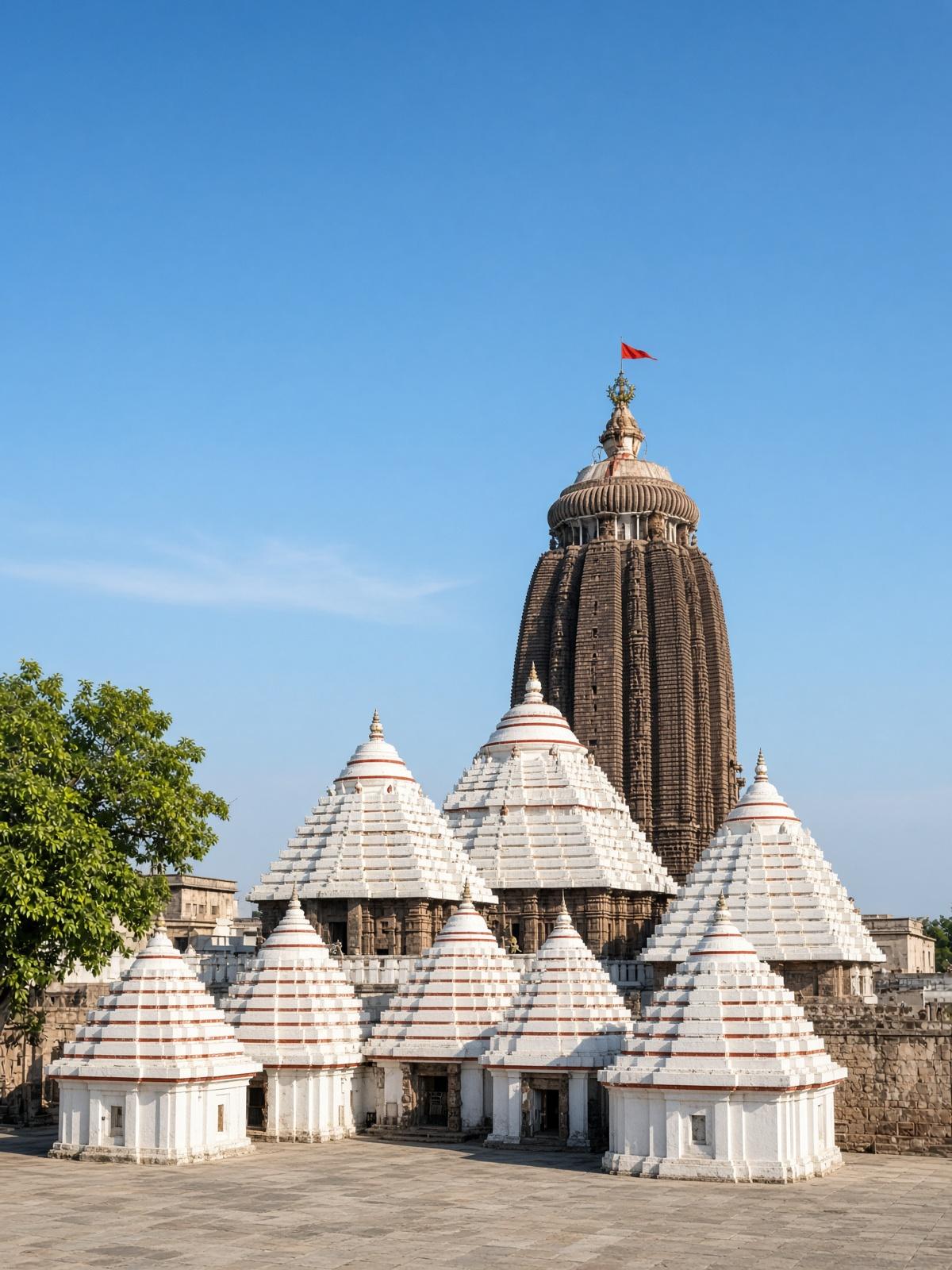
The present great temple belongs to the twelfth century and the Eastern Ganga kings, above all Anantavarman Chodaganga. The older story — Indradyumna, the daru from the sea, a god who chose to be unfinished — is the tradition’s own account of why the form looks as it does. Both can be true in the way a kshetra is true: one in stone, one in the telling.
The tower is counted at about 214 feet. On it sits the Neela Chakra, an alloy discus, and on the chakra the Patitapabana flag. Nilachala, the blue hill, is the name of the ground itself. Puri keeps the Bay on one side and this stone on the other.
Four gates
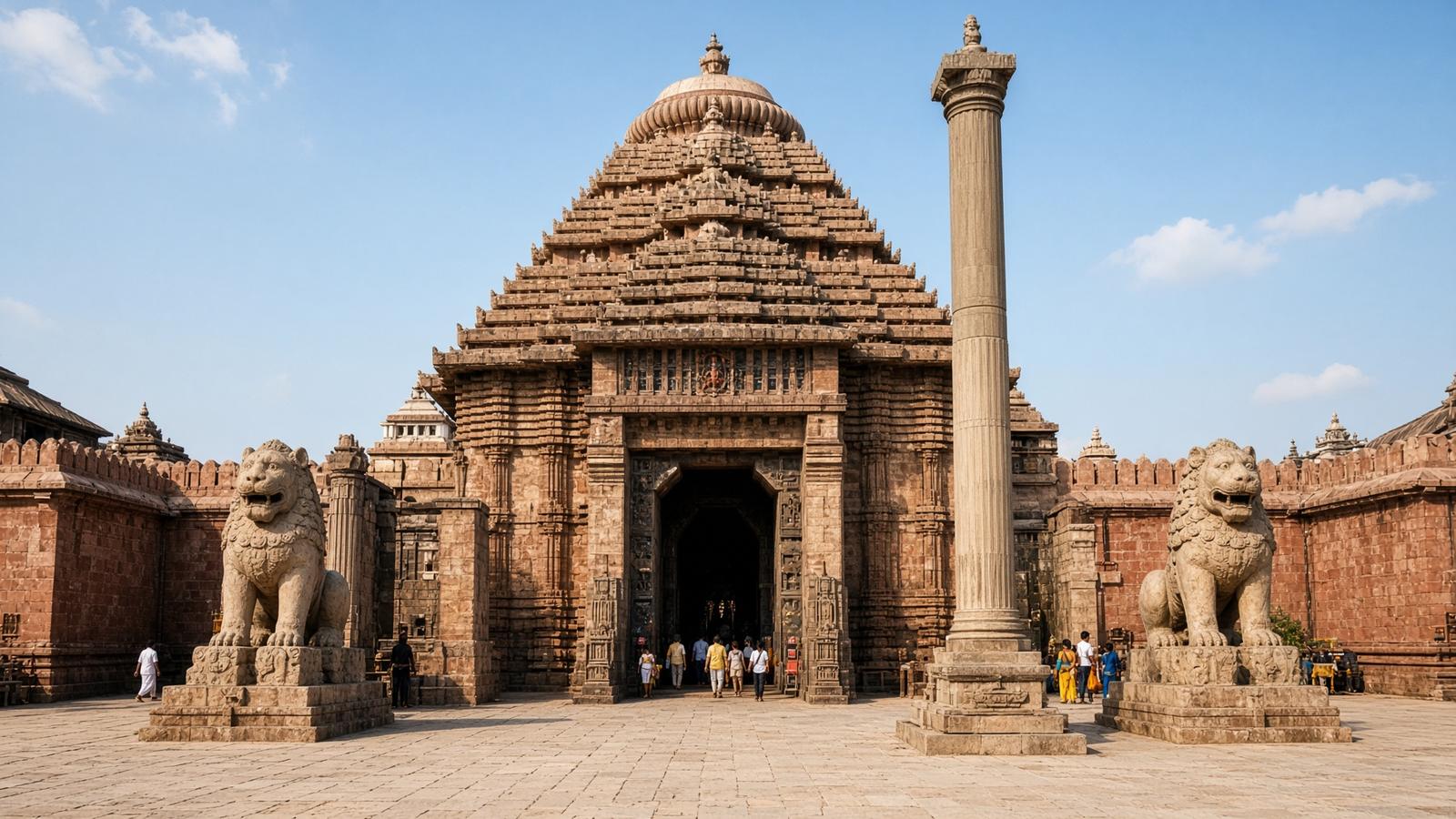
A temple that faces the directions
ସିଂହଦ୍ୱାର
East · lionsSinghadwara
The gate the city uses. Aruna’s pillar stands in front of it, brought from Konark.
ଅଶ୍ୱଦ୍ୱାର
South · horsesAshwadwara
The horse gate.
ବ୍ୟାଘ୍ରଦ୍ୱାର
West · tigersVyaghradwara
The tiger gate.
ହସ୍ତିଦ୍ୱାର
North · elephantsHastidwara
The elephant gate.
Baisi Pahacha
Twenty-two steps inside the approach from the lion gate. Shoes are left before the climb. On the yatra morning the deities come down these steps in pahandi — the same stones a pilgrim uses on an ordinary Tuesday.
Mahaprasad
Chhappan bhoga
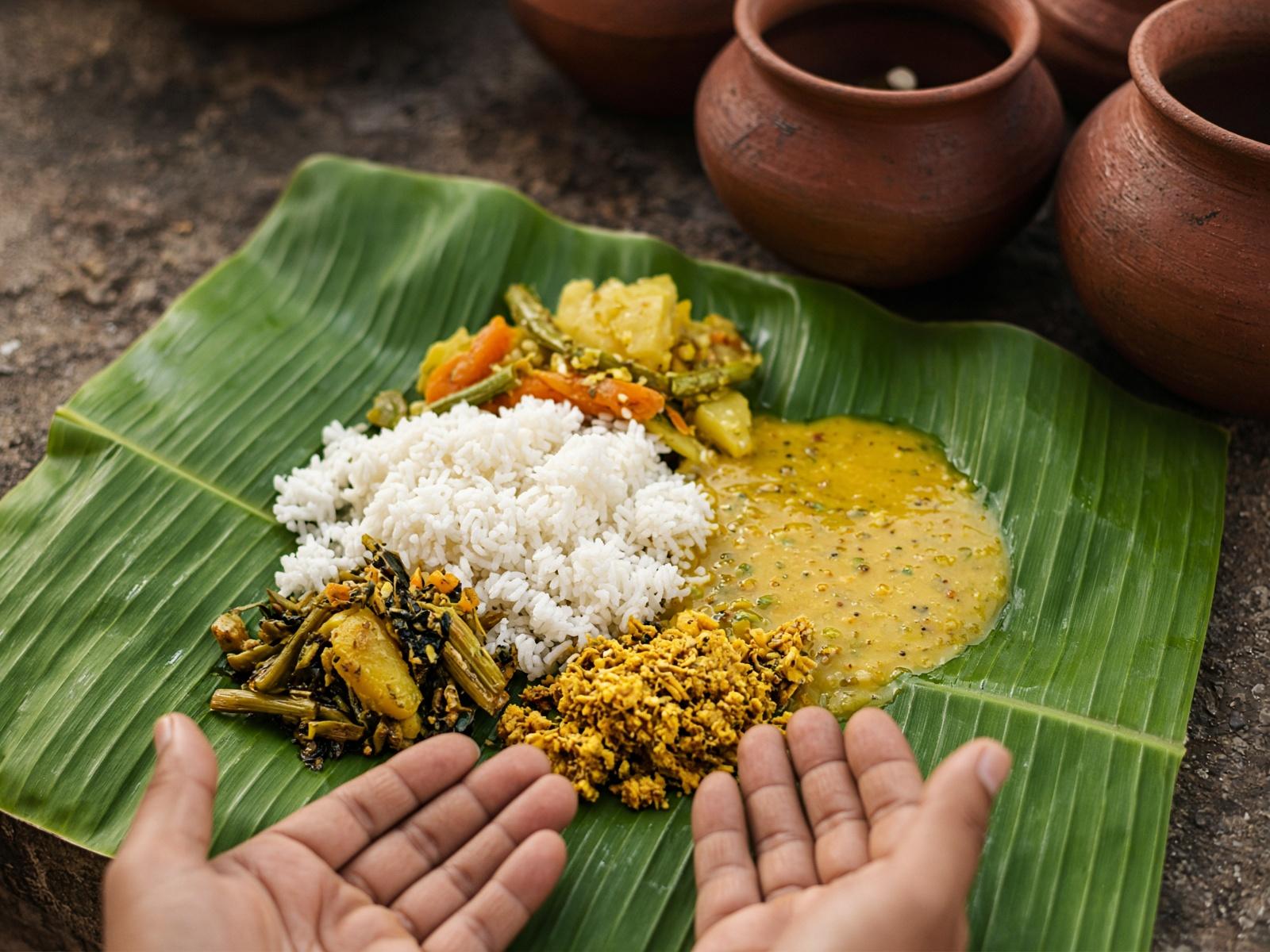
Fifty-six preparations is the classical count, spread through the day’s offerings — not fifty-six bowls on one leaf. The Rosasala cooks in earthen pots, stacked, over a wood fire. Devotees hold that the uppermost pot is ready first. That is the tradition; this site does not pretend to have measured the fire.
At Ananda Bazar the offered food is shared. Temple custom treats mahaprasad as something ordinary distinctions of caste do not govern. Eat it sitting down. Don’t bargain with it.
Nabakalebara
When the body is renewed
In a year that holds an extra month of Ashadha, the wooden bodies are renewed. New daru is sought, the brahma padartha is transferred out of public sight, and the old wood is buried in Koili Baikuntha. It is not a festival on a fixed twelve-year clock. The intercalary month decides, and some generations see it once.
If you go
- Darshan is free. Puri is some sixty kilometres from Bhubaneswar.
- The inner precinct keeps the temple’s own entry custom: Hindus enter the shrine. The shikhara, the gates, and in Rath week the chariots on the street, are how the town shows itself to everyone else.
- Phones, bags and the length of a queue are whatever the administration has posted that morning. A website does not outrank a servitor at the gate.
- Mangala, if you can bear the hour. Badasinghara, if the night besha is what you came for. In Ashadha the Bada Danda is not a road — carry water, and don’t expect a private view of God.